

How to Choose a Flatbed Trucking Company:
How to Choose a Flatbed Trucking Company: 7 Factors That Actually Matter
By Elite Logistics LLC | Published July 2026 | 9 min read
A steel fabricator outside Billings has forty tons of structural beams sitting on the yard, a job site in Bozeman waiting on them by Thursday, and three flatbed quotes on the desk that are $600 apart for the same lane. One carrier owns four step-decks and answers the phone on the second ring. Another is a broker re-posting the load to a board and hoping someone bites. The cheapest number on paper isn’t always the cheapest load once a missed delivery window shuts down a crew for a day.
Flatbed freight doesn’t forgive guesswork the way dry van freight does. There’s no trailer wall to hide a securement mistake, no dock door to protect a load from weather, and no standard box that fits every shipment. Picking the wrong flatbed trucking company doesn’t just risk a late delivery — it risks a shifted load, a blown permit, or a piece of equipment that shows up damaged because nobody tarped it correctly. Here’s what actually separates a flatbed carrier worth hiring from one that’s going to cost you.
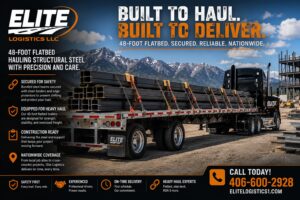
Structural steel secured for transport on an Elite Logistics flatbed trailer
1. Trailer Type Fit for Your Freight
Not every flatbed load belongs on a standard flatbed. Before comparing carriers, know what deck type your freight actually needs:
- Standard flatbed (48–53 ft): The default for building materials, machinery, steel, and cargo up to roughly 48,000 lbs that fits within the 8.5-foot legal height limit.
- Step deck (drop deck): Drops the rear deck lower than a standard flatbed, adding legal height clearance up to roughly 10 feet — the go-to for taller machinery and ag equipment.
- RGN (removable gooseneck): The lowest deck height available, with a detachable front section that creates a drive-on ramp — built for self-propelled equipment like excavators and dozers.
- Conestoga: A flatbed with a retractable tarp system on rails, giving weather protection without the labor of hand-tarping.
A carrier that only runs standard flatbeds will either turn away your tall or oversize freight or quietly bid it as a standard load and run into a permit problem mid-route. Ask upfront what’s actually in the fleet, not just what’s listed on the website.
2. Safety Record & FMCSA Compliance
Flatbed and heavy-equipment lanes see a smaller qualified carrier pool than general dry van freight, which makes vetting more important, not less. Before booking, pull the carrier’s safety snapshot through FMCSA’s SAFER system — it shows safety rating, crash history, and roadside inspection results tied to their USDOT number. A carrier that won’t give you a DOT number, or whose record shows repeated out-of-service violations, isn’t one to hand a $200,000 load to.
3. Permit & Escort Handling
The line between a routine flatbed load and an oversize load is thinner than most shippers expect — a wide piece of equipment or a tall stack of coiled steel can cross it without warning. A flatbed carrier that handles permits in-house, understands state-by-state width and height rules, and knows when a pilot car is required will keep your freight moving. One that treats every load like a standard shipment finds out about the permit problem at a weigh station, not before dispatch.
4. Tarping, Securement & Damage Prevention
Open-deck freight rides exposed to weather and road debris the entire trip, which means securement is the single biggest driver of claims on flatbed loads. Ask how the carrier handles:
- Chain, strap, and binder counts relative to load weight (FMCSA securement rules scale with cargo weight, not guesswork)
- Edge protectors on strapped loads to prevent cutting
- Tarping for weather-sensitive freight — and who absorbs the tarping fee
- Load inspection stops during longer hauls, since straps loosen over the first 50 miles
A carrier that can explain their securement process without hesitation has done this enough times to get it right.
5. Lane Coverage & Capacity
Flatbed capacity tightens seasonally — construction season pulls trailers toward the Southeast and Midwest, and regions like Montana and the broader Mountain West can run thin on available flatbeds outside of harvest and lumber season. A carrier with an established network (or broker relationships that extend their reach, the way Elite Logistics’ Trinity Logistics partnership does) can find equipment when your regional lane goes quiet. One with a single truck and a single lane can’t.
6. Rate Transparency & What You’ll Actually Pay in 2026
Flatbed rates have been running well above dry van this year. National spot averages have hovered in the $3.50–$3.75/mile range through mid-2026, per DAT Freight & Analytics trendline data, with the Southeast running higher and short-haul lanes under 300 miles carrying a real premium due to fixed costs and deadhead exposure. On top of the base linehaul rate, expect line items for:
- Tarping: $50–$150+ per load depending on tarp size and load complexity
- Permits: Vary by state, typically $10–$100 per state crossed for oversize loads
- Escort/pilot cars: $1–$3 per mile when required for width or height
- Fuel surcharge (FSC): Calculated off current diesel pricing, should appear as its own line item
A carrier that quotes one flat number with no breakdown is either underbidding the job or planning to add surprise fees later. For a full breakdown of how freight rates get built across equipment types, see Elite Logistics’ 2026 Freight Shipping Rates & Costs guide.
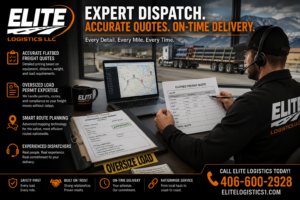
Rate transparency means a full breakdown, not just a bottom-line number
7. Communication & Dispatch Reliability
Flatbed loads go sideways in ways dry van freight rarely does — a permit gets flagged, weather forces a tarping stop, a securement check runs long. What matters is whether the carrier tells you before you have to call and ask. A dedicated point of contact who answers directly, rather than a rotating call center, is worth more on flatbed freight than on almost any other equipment type.
Choosing With Confidence
The cheapest flatbed quote and the right flatbed carrier are rarely the same thing. Match the trailer type to the freight, verify the safety record, confirm who’s handling permits, and get a rate breakdown before you book — not after the truck is already rolling.
Elite Logistics LLC runs flatbed, step deck, and heavy haul equipment out of Manhattan, Montana, backed by a Trinity Logistics partnership (USDOT #1480304) that extends our reach when regional capacity tightens. Get a flatbed freight quote and talk to a dispatcher directly — not a script.
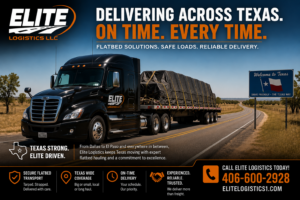
Elite Logistics provides dependable Texas flatbed trucking services with securely tarped freight, experienced drivers, and reliable nationwide transportation. Call 406-600-2928 for professional flatbed shipping solutions.
FAQs
What’s the difference between a flatbed and a step deck trailer?
A standard flatbed has a single deck roughly 60 inches off the ground, giving about 8.5 feet of legal freight height. A step deck (drop deck) lowers the rear deck to around 36–40 inches, allowing freight up to roughly 10 feet tall — the standard choice for taller machinery and agricultural equipment that won’t legally fit on a flatbed.
How much does flatbed trucking cost per mile in 2026?
National spot rates have averaged roughly $3.50–$3.75 per mile through mid-2026, though rates vary significantly by region, season, and load type. Short-haul lanes under 300 miles typically carry a per-mile premium due to fixed costs and deadhead exposure.
Do I need a permit for my flatbed load?
If your freight exceeds 8.5 feet wide, 13.5 feet tall, or 53 feet long, or your gross vehicle weight exceeds standard legal limits, you’ll need an oversize/overweight permit. Requirements vary by state, which is why working with a carrier that handles permitting in-house matters.
What’s the difference between a flatbed carrier and a freight broker?
A carrier owns and operates the trucks and trailers that physically move your freight. A broker arranges transportation through a network of carriers but doesn’t own the equipment. Some companies, including Elite Logistics, operate as both — giving direct-carrier accountability with broker-level network reach when needed.
How is cargo secured on a flatbed trailer?
Securement uses chains, straps, and binders sized to the cargo’s weight, along with edge protectors to prevent straps from cutting into the load. FMCSA securement regulations set minimum standards based on cargo weight and type, and reputable carriers inspect straps at stops during longer hauls since they loosen over the first miles.
What industries use flatbed trucking most?
Construction, energy infrastructure, steel and manufacturing, and agriculture rely most heavily on flatbed trucking for materials like structural steel, turbine components, coiled steel, and farm equipment that don’t fit inside an enclosed trailer.
How do I get a flatbed freight quote from Elite Logistics?
Contact Elite Logistics LLC by phone at (406) 600-2928, by email, or through the quote request form at EliteLogistics1.com. You’ll be connected with a dedicated freight coordinator, not a call center.