

Freight Rates Are Rising in 2026
Freight Rates Are Rising in 2026 — What It Means for Montana Shippers

Elite Logistics provides dependable refrigerated freight transportation with temperature-controlled shipping, nationwide coverage, and reliable cold chain logistics for businesses across the United States.
After nearly four years of soft rates and oversupplied trucking capacity, the freight market is shifting. Heading into the second half of 2026, capacity is tightening, rates are climbing, and shippers who move produce, ag products, or specialized freight are starting to feel the difference — both in cost and in how hard it is to find reliable trucks. For Montana shippers working with Elite Logistics, understanding why this is happening now is the key to planning ahead instead of scrambling later.
Why Freight Rates Are Climbing in 2026
For most of the last four years, there were simply more trucks on the road than freight to fill them. That imbalance kept rates depressed and gave shippers the upper hand at the negotiating table. That dynamic has now flipped.
A combination of factors is pulling capacity out of the market at the same time: “We covered the regulatory side of this shift in detail in Trucking Industry News July 2026.”
- Regulatory enforcement. New non-domiciled CDL rules, a revamped USDOT registration system, and the ongoing removal of fraudulent electronic logging devices (ELDs) are sidelining carriers who previously kept rates artificially low.
- Driver shortage. Industry estimates put the driver shortage at roughly 175,000 positions in 2026, and large carriers are raising driver pay 12-15% just to retain talent.
- Slower fleet growth. Carriers are replacing aging equipment rather than expanding, which means the total number of available trucks is shrinking even as freight demand holds steady.
The result: tender rejection rates — a signal of how often carriers turn down loads because they have better options — have reached their highest levels since 2022. That’s a clear sign carriers are regaining pricing power after years of thin margins.
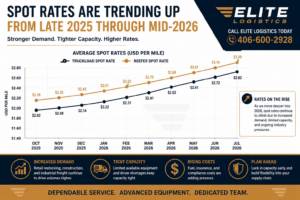
Elite Logistics illustrates the upward trend in truckload and refrigerated spot rates from late 2025 through mid-2026, helping shippers understand changing market conditions and plan transportation budgets.
What the Numbers Look Like
The rate movement isn’t just talk — the data backs it up. Dry van spot rates are projected to climb toward $2.85 per mile by mid-2026, up from roughly $2.31 late last year, while contract freight is seeing steady annual increases in the 6-8% range as shippers lock in longer-term agreements to secure capacity. “For a deeper breakdown of rate drivers across freight categories, see our Specialized Freight Rates & Requirements guide.”
Refrigerated freight is moving even faster. Reefer loads are commanding a premium over dry van, with rates pushing past $3 per mile in many lanes — a meaningful shift for produce shippers and ag operations that depend on temperature-controlled capacity during harvest and peak shipping windows.
Contract rates in general are running nearly 10% above year-ago levels, and load-to-truck ratios have improved to their healthiest balance since 2021 — meaning more consistent freight for reliable carriers, and more competition for capacity among shippers.
What This Means If You’re Shipping Produce or Ag Freight Out of Montana
For farms, packing houses, and ag shippers across Montana and the broader Mountain West, tightening reefer capacity is the trend to watch most closely. A few practical implications:
1. Book earlier. With load-to-truck ratios improving for carriers, last-minute reefer capacity is harder to secure than it was a year ago — especially during harvest windows.
2. Expect rate increases on refrigerated lanes specifically. Reefer premiums are outpacing dry van growth, so budgeting for produce and cold-chain freight should account for a steeper increase than general freight.
3. Relationships matter more than spot-market shopping. Carriers with pricing power are prioritizing shippers they have consistent relationships with. Locking in a dependable partner now protects you from capacity crunches later in the season. “Read our guide to finding a reliable trucking partner for more on what separates dependable carriers from the rest.”
4. Specialized and flatbed freight is tightening too. It’s not just reefer — flatbed and heavy haul capacity is also being squeezed as fleets scale back expansion and focus on replacing aging equipment rather than growing.
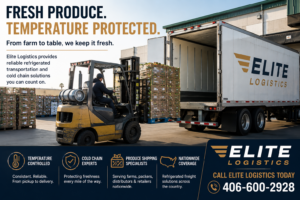
Elite Logistics provides reliable refrigerated transportation for produce growers, packing facilities, distributors, and retailers with temperature-controlled freight solutions delivered nationwide.
Costs Are Still Elevated — That’s the Other Half of the Story
It’s worth noting that rising rates don’t mean rising profits across the board. Carriers are still facing real cost pressure from insurance, maintenance, fuel, and new equipment — all of which remain elevated in 2026. Tariffs and ongoing equipment shortages are adding further pressure on the cost side, which is part of why capacity is tightening rather than expanding even as rates improve.
For shippers, this means the rate increases you’re seeing reflect a genuinely constrained market — not simply carriers testing what the market will bear. That distinction matters when you’re negotiating contracts: a carrier quoting a higher rate in 2026 is very likely responding to real cost and capacity pressure, not opportunism.
How Elite Logistics Is Navigating the 2026 Market
At Elite Logistics, we’ve built our reputation on reliability during exactly this kind of market shift. As a refrigerated, flatbed, and specialized freight carrier based in Manhattan, MT, and partnered with Trinity Logistics, we’re positioned to help Montana and Mountain West shippers lock in dependable capacity through the rest of 2026 — whether that’s produce moving out of the Gallatin Valley, ag equipment, or specialized freight that needs a carrier who understands the region.
If you’re a produce farm, packing house, or commercial shipper trying to plan around a tightening capacity market, now is the time to build that relationship — not after the next harvest crunch hits.
Frequently Asked Questions
Why are freight rates rising in 2026?
Freight rates are rising primarily because trucking capacity is tightening. Regulatory enforcement around non-domiciled CDLs, the removal of fraudulent ELDs, and slower fleet growth are all reducing the number of available trucks even as freight demand holds steady.
Are refrigerated freight rates rising faster than dry van rates?
Yes. Reefer rates are outpacing dry van growth in 2026, with many lanes pushing past $3 per mile, reflecting tighter capacity for temperature-controlled freight specifically.
How much have freight rates increased in 2026?
Dry van spot rates have climbed toward the $2.85 per mile range by mid-2026, up from roughly $2.31 late in 2025, while contract rates are running close to 10% above year-ago levels.
Will freight rates keep rising through the rest of 2026?
Most industry analysts expect continued firming through the second half of 2026 and into 2027, though the pace will depend on how quickly regulatory enforcement removes capacity and whether broader economic conditions stay stable.
How can produce shippers protect themselves from tightening reefer capacity?
Booking earlier, building a consistent relationship with a dependable carrier, and avoiding reliance on last-minute spot-market capacity are the most effective ways to manage rising reefer demand during harvest season.
Is now a good time to lock in a contract rate with a carrier?
For many shippers, yes. With capacity tightening and rates trending upward, locking in a relationship and rate structure now can protect against steeper spot-market pricing later in the year.