
Our Blogs
Explore expert tips, industry updates, and practical advice to make smarter logistics decisions.
Reefer vs Refrigerated Truck
Reefer vs Refrigerated Truck: Is There Really a Difference?
If you’ve spent any time around the freight industry, you’ve heard shippers, brokers, and drivers use “reefer” and “refrigerated truck” as if they’re interchangeable — because they are. A reefer is simply industry shorthand for a refrigerated truck. There’s no meaningful difference between the two terms; one is just faster to say on a dispatch call.
But while the terminology is simple, understanding how reefer trucking actually works — and how it compares to other trailer types — matters a lot if you’re shipping perishable freight in and around Montana. At Elite Logistics, headquartered in Manhattan, MT, refrigerated trucking is one of our core services, so we get this question often enough to write a full guide on it. If you’re also weighing reefer against other trailer types for an upcoming shipment, our Dry Van vs. Reefer vs. Flatbed equipment guide is a good companion read once you finish this one.

Elite Logistics provides dependable refrigerated trucking services with temperature-controlled transportation, nationwide cold chain logistics, on-time delivery, and reliable reefer freight solutions for perishable cargo.
Where Does the Term “Reefer” Come From?
The word “reefer” is short for “refrigerator,” and its roots go back further than most people expect. The term originated from the early days of refrigerated shipping, when cargo was loaded onto ships and transported to refrigerated warehouses that were called reefers, taking their name from the large blocks of ice once used to keep food cold. Over time, the term migrated from maritime shipping onto trucking, and today it’s used almost exclusively to describe refrigerated trailers and the freight that moves inside them.
A refrigerator truck, also called a chiller lorry or reefer, is a van or truck built to carry perishable freight at low temperatures, and most long-distance refrigerated hauling is done using articulated trucks pulling refrigerated box-style semi-trailers. So whether someone says “reefer load,” “refrigerated shipment,” or “cold chain freight,” they’re all describing the same category of transportation.
How a Reefer Unit Actually Works
The refrigeration system that makes a reefer trailer function is called a TRU — a transport refrigeration unit. A typical reefer setup includes a transport refrigeration unit that powers the cooling system using diesel or electric energy, evaporator and condenser coils that regulate heat absorption and release, an insulated trailer body that minimizes heat transfer, and air chutes and floor channels that distribute cold air evenly throughout the trailer.
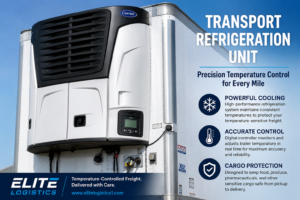
Transport refrigeration units continuously regulate trailer temperatures to protect refrigerated freight throughout pickup, transit, and final delivery. Elite Logistics provides dependable temperature-controlled transportation across the United States.
The TRU is mounted on the front of the trailer and runs on a small diesel engine while the truck is moving, but it can switch to electric standby mode when parked and plugged into an external power source, which cuts down on fuel use and emissions. This independence from the truck’s main engine is a key detail — refrigeration continues running even if the truck is idling or shut off entirely, which is exactly what keeps produce, dairy, and pharmaceuticals stable during long hauls, rest stops, and overnight parking.
At Elite Logistics, that’s precisely why refrigerated trucking is treated as a precisely managed cold chain process — from pre-cooling the trailer before loading, to continuous temperature monitoring en route, to an intact delivery at the dock. Any break in that chain means spoiled produce, compromised pharmaceuticals, or a costly recall, which is why our reefer loads are GPS-tracked and temperature-monitored throughout transit, with logs and delivery documentation available on request.
Reefer, Refrigerated Truck, Freezer Truck: Are They All the Same?
This is where some confusion creeps in. “Reefer” and “refrigerated truck” are truly synonymous. But freezer trucks are a distinct category worth knowing, especially if you’re shipping deep-frozen goods rather than chilled produce or dairy.
A refrigerated truck — also called a reefer truck or fridge truck — is designed to maintain temperatures above freezing, typically between 32°F and 55°F, using a TRU system that functions much like a refrigerator on wheels. Freezer trucks, on the other hand, are built for much colder cargo, requiring more potent cooling systems that maintain temperatures as low as -22°F, along with more robust insulation and features like defrosting systems that reefer trucks don’t need.
Elite Logistics covers the full cold chain spectrum, so this range isn’t theoretical for us — our reefer fleet handles everything from deep-frozen freight at -20°F, to standard frozen at 0°F, to refrigerated produce and dairy at 32°F–38°F, to pharmaceutical cool chain shipments at 2°C–8°C, to mild protection for confectionery at 55°F–65°F. If you’re not sure which set-point your commodity needs, that’s exactly the kind of question our refrigerated trucking team can walk you through before you book.
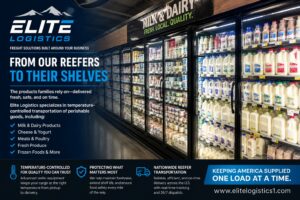
*Elite Logistics keeps America’s cold chain moving by delivering fresh dairy and refrigerated products nationwide. Learn the difference between a reefer vs refrigerated truck and how temperature-controlled transportation protects perishable freight from pickup to store shelves.
What Kind of Freight Moves in Reefer Trucks?
Reefer trucking touches more industries than people realize. Grocery suppliers rely on refrigerated truckloads to keep produce fresh from farm to store, pharmacies and biotech companies depend on climate control for medications that degrade in warm temperatures, food-service companies need reefer trucking to supply restaurants with fresh meats and vegetables, and floral businesses count on reefer capacity to deliver flowers across long distances.
For Montana shippers, that means everything from Gallatin Valley produce and dairy operations to regional food distributors and agricultural processors depend on reliable reefer capacity to get product to market without spoilage. If your freight is closer to the field than the warehouse, our produce trucking service is built specifically around farm-to-market timing, and our Produce Trucking Rates & Requirements guide breaks down what that actually costs in 2026.
Why Reefer Freight Commands Higher Rates
If you’ve noticed refrigerated loads pay more than dry van freight, there’s a reason. Reefer loads generally command premium rates compared to dry van freight, often 15–30% higher, due to the specialized equipment and expertise required to move them. Our own pricing desk has tracked refrigerated freight averaging around $3.12 per mile nationally in 2026 — a premium of roughly 45 cents over dry van — because reefer trailers cost more to operate and demand for temperature-controlled capacity has tightened significantly. If you want the full breakdown of how those numbers get built, our Freight Shipping Rates and Costs guide covers line-haul, fuel surcharges, and accessorials across every equipment type, not just reefer.
That premium reflects real added complexity — reefers must run on continuous cooling in warmer areas to protect freight from heat exposure, and any lapse in temperature control can mean a spoiled load and a costly claim. Our exception management protocol exists for exactly that scenario: when a temperature exception is flagged, our 24/7 operations team follows an established escalation process that can include driver notification, route adjustment, emergency reefer servicing, or transfer to a backup trailer — without waiting for the shipper to notice a problem first.
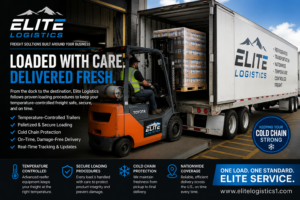
An Elite Logistics forklift operator carefully loads palletized freight into a refrigerated reefer trailer, illustrating the safe loading procedures required for temperature-controlled shipments and cold chain integrity from the warehouse to final delivery.
Reefer vs. Dry Van vs. Flatbed: Choosing the Right Equipment
“Reefer vs refrigerated truck” isn’t really a decision shippers have to make — they’re the same thing. The decision that actually matters is choosing the right equipment category for your freight: reefer, dry van, or flatbed. Pick the wrong one and freight either arrives damaged, gets rejected at the dock, or costs more than it should.
- Reefer: Temperature-sensitive freight — produce, dairy, pharmaceuticals, floral
- Dry van: Standard palletized freight that doesn’t need climate control
- Flatbed: Oversized, irregular, or load-from-the-top freight like steel, machinery, or building materials
We cover this decision in more depth in our Dry Van vs. Reefer vs. Flatbed equipment guide, which is worth a read if reefer isn’t a given for your shipment. And if your freight straddles categories — say, refrigerated pharmaceuticals that also need flatbed-style handling — our specialized freight services and heavy haul division are built for exactly that kind of complexity.
One More Distinction: Truck vs. Trailer vs. Container
“Reefer truck” is often used loosely to describe the whole rig, but technically, the truck itself is just a standard semi-cab — the reefer is really the trailer. Most reefer trailers run 53 feet in length, though shorter configurations exist for regional and local delivery.
Beyond trucking, the reefer concept also extends into international shipping through refrigerated containers used for ocean and intermodal freight — critical for pharmaceutical cold chains where medications and vaccines have to arrive in the same condition as when loaded. For most domestic Montana shippers, though, the reefer trailer pulled by a standard tractor is the equipment you’ll actually be working with.
Reefer Freight Challenges to Know Before You Ship
Temperature-controlled freight isn’t without its complications. Reefer transport is more complex to operate than dry van freight because loads are sensitive to temperature changes and require specialized equipment to maintain the right conditions throughout transit. Delivery windows can be tighter too — reefer trucks often aren’t unloading at grocery stores midday, since most shelf-stocking happens after stores close, pushing deliveries into early mornings and late evenings.
There’s also a security angle worth knowing: temperature-sensitive freight is a frequent target for cargo theft precisely because it’s high-value and time-critical. If that’s a concern for your shipments, our Freight Theft in 2026 guide covers how loads get stolen and what shippers can do to protect them.
None of this is a reason to avoid reefer shipping — it’s why working with an experienced logistics partner matters. Elite Logistics vets carrier equipment, monitors transit temperatures, and coordinates delivery windows so your perishable freight arrives in the same condition it left in, with a full digital documentation package — time-stamped temperature logs, GPS route records, proof of delivery, and inspection notes — for every load.
The Bottom Line
Reefer and refrigerated truck are the same thing — full stop. The “reefer” label is just trucking-industry shorthand that’s stuck around since the early days of ice-cooled shipping. What actually matters for shippers is understanding how the equipment works, what temperature range your freight needs, and who you trust to haul it.
Whether you’re shipping Gallatin Valley produce, dairy, or temperature-sensitive goods anywhere across the region, Elite Logistics has the reefer capacity and cold chain expertise to keep your freight moving safely from pickup to delivery.
1. FDA — FSMA Sanitary Transportation of Human and Animal Food Rule
https://www.fda.gov/food/food-safety-modernization-act-fsma/fsma-final-rule-sanitary-transportation-human-and-animal-food
2. Global Cold Chain Alliance (GCCA)
https://www.gcca.org/
Ready to book reefer capacity for your next shipment? Request a quote or call (406) 600-2928 to get started today.
Related Elite Logistics Resources:
- Refrigerated Trucking Services
- Dry Van vs. Reefer vs. Flatbed: Long Haul Equipment Guide
- Produce Trucking Services
- Produce Trucking Rates & Requirements (2026)
- Freight Shipping Rates and Costs (2026)
- Freight Theft in 2026: What Shippers Need to Know
- Specialized Freight Services