
Our Blogs
Explore expert tips, industry updates, and practical advice to make smarter logistics decisions.
Hot Shot Trucking vs. LTL vs. Flatbed
Hot Shot Trucking vs. LTL vs. Flatbed: How to Know Which One Your Load Needs
Published July 2026 · Elite Logistics LLC · 9 min read
A combine breaks down mid-harvest and the replacement part is sitting in a warehouse three states away. Hot Shot Trucking vs. LTL vs. Flatbed: How to Know Which One Your Load Needs, A construction crew needs one pallet of steel connectors to keep a job site moving. A distributor has forty pallets of dry goods heading to six different retail stores next week, none of it urgent.
Hot shot trucking delivers urgent freight direct, with no terminal stops.
Three completely different shipments — and three completely different answers to the same question: how should this move?
Shippers hear “hot shot,” “LTL,” and “flatbed” thrown around like they’re interchangeable, but each one is built for a different combination of size, urgency, and budget. Pick the wrong one and you either overpay for speed you didn’t need, or you miss a deadline waiting on a mode that was never built to hurry. Here’s how to tell them apart — and how to know, in under a minute, which one your next load needs.
What Is Hot Shot Trucking?
Hot shot trucking is expedited, direct-to-destination freight hauled by a Class 3-5 pickup truck pulling a gooseneck, flatbed, or lowboy trailer. Loads typically run 20 to 40 feet and top out around 16,500 pounds. There’s no terminal, no cross-docking, and no sharing trailer space — one truck, one shipper, one straight shot from pickup to delivery.
Hot shot rigs pair a medium-duty truck with a 20-40 ft gooseneck or flatbed trailer.
That structure is what makes hot shot the fastest ground option available. Dispatch often happens within hours of booking, and because the freight never gets unloaded and reloaded at a hub, transit time is close to pure drive time. It’s the mode built for the moments when downtime costs more than the shipping bill: a combine part needed before sundown during harvest, an oilfield component holding up a rig, or a manufacturing line waiting on one missing piece. Our Hot Shot Trucking service runs 24/7 dispatch for exactly these situations.
Best for: urgent, time-critical loads under roughly 16,500 lbs that need to move now and can’t wait for scheduled capacity.
What Is LTL Shipping?
Less-than-truckload (LTL) shipping consolidates freight from multiple shippers into one trailer. Instead of paying for an entire truck, you pay only for the space your pallets take up — usually somewhere between 150 and 15,000 pounds, billed by freight class rather than flat weight.
LTL shipments consolidate multiple shippers’ freight through terminal hubs
The tradeoff for that lower cost is time and handling. LTL freight moves through a hub-and-spoke network, getting transferred between trucks and terminals as it travels toward its destination. Each transfer adds a day or more to transit and a touchpoint where damage or misrouting can happen. For freight that isn’t racing a deadline, though, LTL is the most budget-efficient way to move it.
Best for: smaller, non-urgent shipments where sharing trailer space and accepting a longer transit window saves real money.
What Is Flatbed (FTL) Trucking?
Full truckload (FTL) flatbed trucking dedicates an entire 48- to 53-foot trailer to one shipper, pulled by a standard semi-tractor. Flatbeds can carry 45,000+ pounds with no walls or ceiling restricting dimensions, which makes them the only realistic option once a load outgrows hot shot capacity — structural steel, heavy construction equipment, large agricultural machinery, and anything requiring oversize permits. Our Flatbed Trucking service runs this exact equipment class across all 48 states. FTL is cost-efficient when you have enough freight to fill, or nearly fill, the trailer.
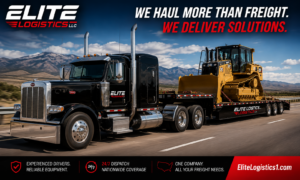
Flatbed FTL trucking moves large, heavy freight that exceeds hot shot limits.
If you’re only using a fraction of a 53-foot deck, you’re paying for space you’re not using — which is often where hot shot or LTL becomes the smarter call instead.
Best for: large, heavy, or oversized freight that exceeds hot shot limits, especially when the load fills most or all of the trailer.
Side-by-Side Comparison
| Hot Shot | LTL | Flatbed (FTL) | |
|---|---|---|---|
| Equipment | Class 3-5 truck + 20-40 ft gooseneck/flatbed trailer | Shared semi-trailer, multiple shippers | Dedicated 48-53 ft semi-trailer |
| Weight capacity | Up to ~16,500 lbs | ~150-15,000+ lbs (freight class billed) | 45,000+ lbs |
| Speed | Fastest — direct, no stops, often same-day dispatch | Slowest — hub-and-spoke, multiple transfers | Moderate — direct but scheduled |
| Cost structure | Premium, exclusive-use pricing | Most economical per unit, shared cost | Efficient only when trailer is full/near-full |
| Best for | Urgent, time-critical, small-to-mid loads | Non-urgent, smaller loads, budget priority | Large, heavy, oversized loads |
The 3-Question Decision Framework
Before you book anything, run your shipment through these three questions in order.
1. Does this load have a hard deadline? If it needs to arrive within 24-48 hours or operations stop — a broken-down combine during harvest, a shut-down job site, a stalled production line — hot shot is almost always the answer, regardless of what it costs relative to the alternatives. Speed is the value.
2. How big and heavy is it? If the answer to question one is no, size takes over. Under roughly 16,500 lbs and it’ll fit on a 20-40 ft trailer: hot shot or LTL, depending on urgency. Over that, or oversized in any dimension: you’re in flatbed territory, full stop — hot shot equipment simply isn’t built to carry it.
3. Is cost or speed the bigger priority? For mid-sized, non-urgent freight that could go either way, this is the tiebreaker. If the shipment can tolerate a longer transit window and multiple handling points, LTL saves money. If predictability and minimal handling matter more than shaving dollars off the invoice, a dedicated truck — hot shot or FTL, depending on size — is worth the premium.
Real-World Scenarios
Combine breaks down during harvest. A single hydraulic component, needed same-day, 400 miles away. Small, urgent, no deadline flexibility → hot shot.
Restocking a distribution center on a normal cycle. Twelve pallets of dry goods, delivery window of a week, no rush → LTL.
Moving a round baler across three states for the new season. Roughly 6,000-7,000 lbs, oversized dimensions, no same-day urgency → flatbed, unless a breakdown makes it urgent, in which case hot shot’s 16,500 lb ceiling may still cover it.
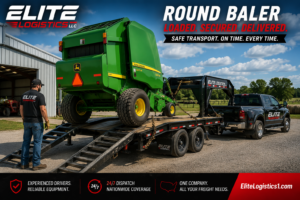
A round baler loaded for transport — the kind of shipment that can call for hot shot or flatbed, depending on urgency.
A structural steel delivery for a job site opening next month. Heavy, bulky, filling most of a 48-ft trailer, deadline weeks out → flatbed FTL, booked ahead for the best rate.
Notice the pattern: urgency moves you toward hot shot, size moves you toward flatbed, and everything comfortably in the middle — small, patient, budget-conscious — lands on LTL.
When You Might Need More Than One Mode
Some operations don’t fit neatly into one box. A construction company running a job site might use flatbed FTL for the bulk delivery of materials at project kickoff, then lean on hot shot for the one-off urgent part that shows up missing three weeks in. That’s normal, and it’s exactly why working with a broker who runs all three services — rather than a single-mode carrier — matters. You want someone who can look at this specific load and tell you honestly which mode fits, not just sell you whatever they happen to run.
For a full breakdown of how pricing works across every mode, see our guide to Freight Shipping Rates and Costs in 2026.
Frequently Asked Questions
What is the weight limit for hot shot trucking? Most hot shot loads max out between 10,000 and 16,500 pounds on a 20- to 40-foot gooseneck, flatbed, or lowboy trailer pulled by a Class 3-5 truck. Shipments heavier or longer than that typically need to move as flatbed FTL freight instead.
Is hot shot trucking more expensive than LTL? Per shipment, yes. Hot shot books an exclusive truck and trailer for one shipper with no shared space, so it carries a premium over LTL. LTL is more economical because your freight shares trailer space and costs with other shippers, but it moves slower and passes through freight terminals.
When should I use flatbed instead of hot shot? Choose flatbed FTL when your load exceeds hot shot weight or length limits, when you have enough freight to fill or nearly fill a 48- to 53-foot trailer, or when cost efficiency matters more than same-day speed.
Can hot shot trucking cross state lines? Yes. Hot shot carriers regularly run regional and interstate lanes. Interstate hot shot freight requires a USDOT number and, depending on the load, MC operating authority, which a licensed broker like Elite Logistics LLC verifies before dispatch.
Bottom Line
There’s no universally “best” mode — only the right mode for what’s on the trailer and when it needs to get there. Urgency points you to hot shot. Size and weight point you to flatbed. Everything patient and modest in scale points to LTL. When a load doesn’t fit neatly into one category, that’s what a dispatch team is for.
Not sure which one your next shipment needs? Request a quote and Elite Logistics LLC will match your load to the right mode — hot shot, LTL, or flatbed — before the truck ever rolls.