
Our Blogs
Explore expert tips, industry updates, and practical advice to make smarter logistics decisions.
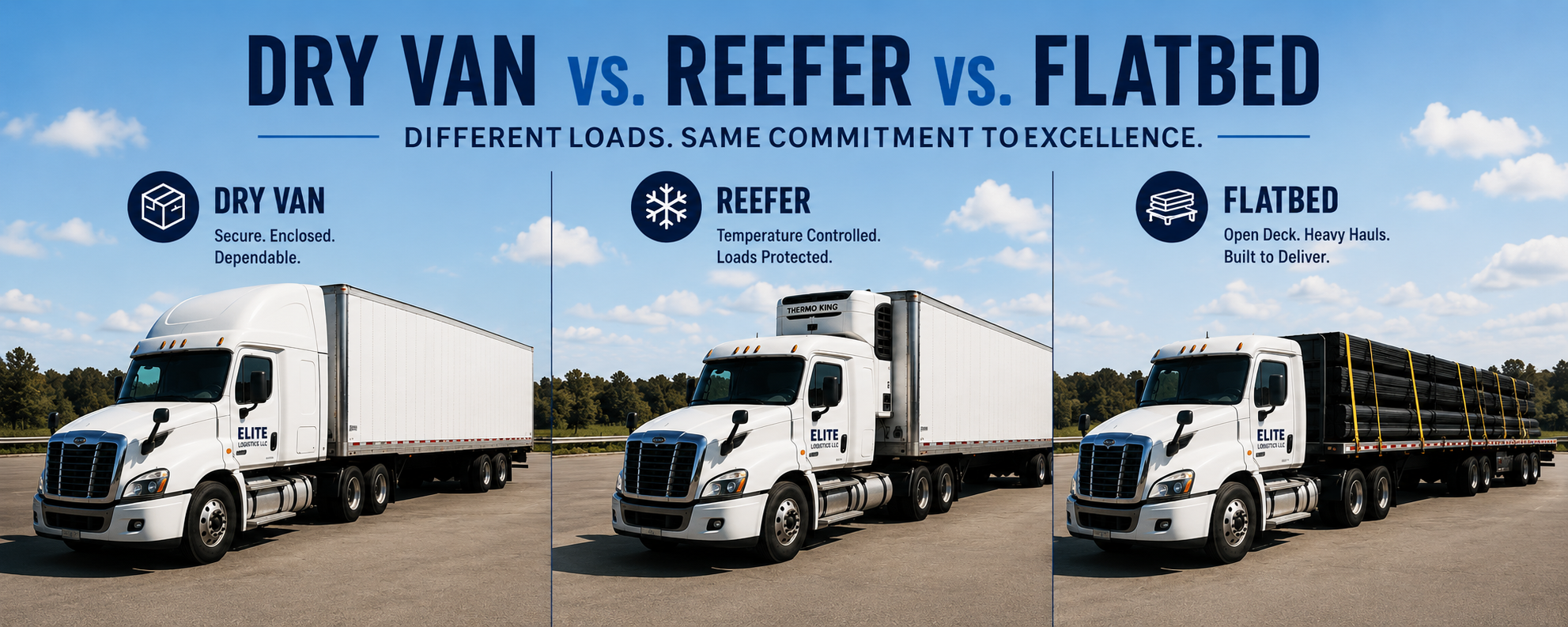
Dry Van vs. Reefer vs. Flatbed
Dry Van vs. Reefer vs. Flatbed: Long Haul Equipment Guide
Pick the wrong trailer and your freight either arrives damaged, gets rejected at the dock, or costs more than it should. The three workhorses of long haul trucking — dry van, reefer, and flatbed — each have specific freight they’re built for. Here’s how to match them up.

Get a fast freight quote from Elite Logistics LLC — flatbed, heavy haul, hot shot, and specialized trucking across the U.S.
Dry Van: The Default
The standard 53′ enclosed trailer. Sealed, weatherproof, no temperature control. Roughly 70% of OTR freight in the US moves in dry vans.
Best for:
- Palletized goods
- Packaged consumer products
- Non-perishable food and beverages
- Retail and e-commerce freight
- General manufactured goods
Capacity:
- Length: 53 feet
- Max payload: ~45,000 lbs
- Pallet count: 26–30 standard pallets
Pros: Cheapest of the three, widest carrier availability, simple loading Cons: No climate control, limited oversize capacity, restricted access for non-dock pickups
Reefer: Temperature-Controlled
A reefer is a dry van with a refrigeration unit on the nose, capable of holding temps from frozen (-20°F) to climate-controlled (60°F+). Essential for any temperature-sensitive freight.
Best for:
- Fresh produce, meat, dairy
- Frozen foods and ice cream
- Pharmaceuticals and vaccines
- Floral and live plants
- Chemicals requiring temp control
- Some electronics and cosmetics
Capacity:
- Length: 53 feet (slightly less interior than dry van)
- Max payload: ~43,500 lbs
- Pallet count: 26 standard pallets
Pros: Wide temperature range, climate control protects freight Cons: Higher rate per mile (typically $0.30–$0.60 more), reefer fuel charge, more maintenance
Flatbed: Open Deck
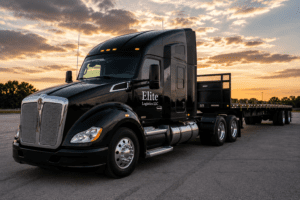
An open deck trailer with no walls or roof. Load is secured with straps, chains, and tarps. Built for freight that can’t fit through a roll-up door.
Best for:
- Construction materials (lumber, steel, pipe)
- Heavy machinery and equipment
- Vehicles and large parts
- Pre-fab buildings and structures
- Oversized loads (with permits)
- Anything loaded by crane or forklift from the side
Capacity:
- Length: 48–53 feet
- Max payload: ~48,000 lbs
- Width: 8.5 feet standard (wider needs permits)
Pros: Side and top loading, handles oversized freight, no door limitations Cons: Exposed to weather (tarping adds cost), requires more driver skill for securement, narrower carrier base
Specialty Equipment Worth Knowing
- Step deck — Flatbed with a lower main deck for taller freight (up to 10′ tall vs. 8.5′ on standard flatbed)
- RGN (removable gooseneck) — For heavy machinery that drives on/off
- Conestoga — Flatbed with retractable tarp system, hybrid of flatbed access and dry van weather protection
- Power-only — Tractor without trailer, hooks to customer’s trailer
Quick Decision Matrix
| Your Freight | Use This |
|---|---|
| Palletized goods, no temp needs | Dry van |
| Anything refrigerated or frozen | Reefer |
| Lumber, steel, machinery | Flatbed |
| Tall freight (8.5’+) | Step deck |
| Heavy equipment that rolls | RGN |
| Flatbed freight needing weather protection | Conestoga |
Cost Comparison (Approximate, 2026)
For a 1,000-mile lane:
- Dry van: $2,200–$2,800
- Reefer: $2,600–$3,400
- Flatbed: $2,400–$3,200
- Specialty (step deck/RGN): $3,000–$4,500+
Actual rates vary by lane, season, and market.
FAQ
Can I ship dry freight on a reefer? Yes — many shippers do, especially in produce season when reefers are deadheading. Rate is usually negotiable.
Do flatbed loads always need tarps? Not always. Steel coils and machinery often ship untarped. Lumber, drywall, and weather-sensitive freight do.
What’s the weight limit on a long haul trailer? Federal limit is 80,000 lbs gross — that’s tractor + trailer + freight combined. Usable payload is around 44,000–48,000 lbs depending on equipment.
CTA
Not sure which equipment fits your freight? Our long haul trucking team → will help match equipment to your load — request a quote and we’ll spec it out.