

How to Choose a Long Haul Trucking Company
How to Choose a Long Haul Trucking Company: 7 Factors That Actually Matter

Get a fast freight quote from Elite Logistics LLC — flatbed, heavy haul, hot shot, and specialized trucking across the U.S.
Picking a long haul trucking company sounds simple until your freight is sitting on a dock in Memphis at 6 a.m. and nobody is answering the phone. The carrier you choose decides whether your cargo arrives on time, undamaged, and documented — or whether you spend the week on the phone with claims departments.
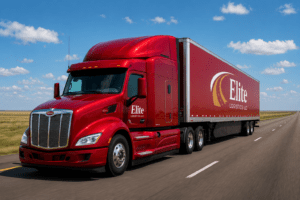
Elite Logistics tractor trailer
This guide walks through the seven factors that separate reliable OTR carriers from the rest. Use it before signing your next contract.
Long haul trucking — also called over-the-road (OTR) trucking — covers freight moves typically over 250 miles, often crossing multiple states. The companies that run these lanes vary wildly in quality. Some operate modern, well-maintained fleets with experienced drivers. Others cut corners on maintenance, driver pay, and insurance — and you only find out when something goes wrong. Knowing what to evaluate up front protects your freight, your timelines, and your customer relationships.
Safety Record and DOT Compliance
Before anything else, check the carrier’s safety profile. Every legitimate interstate freight carrier in the US has a USDOT number, and their safety record is public through the FMCSA’s SAFER system.
What to look at:
- USDOT number — Confirm it’s active and matches the company name
- Out-of-service rates — Lower is better; the national average is roughly 20% for vehicles and 5% for drivers
- Crash history — Look for patterns, not isolated incidents
- Safety rating — Satisfactory, Conditional, or Unsatisfactory
A long haul carrier that won’t share their DOT number is a long haul carrier you don’t want.
Insurance Coverage
A reliable long haul trucking company carries cargo insurance, auto liability, and general liability — and can produce a Certificate of Insurance (COI) on request. Industry-standard minimums:
- Auto liability: $1 million
- Cargo insurance: $100,000 (higher for high-value freight)
- General liability: $1 million
Verify coverage is current. Ask whether the carrier will name your company as a certificate holder so you’re notified if coverage changes. Insurance gaps are how shippers end up paying for damaged freight out of pocket.
Equipment and Fleet Age
Older equipment breaks down more. Breakdowns mean missed delivery windows. Ask:
- What’s the average age of the tractor fleet?
- How often are trailers inspected?
- Do they have the right equipment for your freight (dry van, reefer, flatbed)?
- Do they own their equipment or lease it from owner-operators?
Carriers running late-model equipment with documented maintenance schedules deliver more consistently than those running whatever’s available.
Driver Quality and Retention
OTR trucking is hard. Carriers that pay well, schedule reasonable hours, and treat drivers properly keep their good ones. Carriers that don’t see constant turnover — and inexperienced drivers move your freight.

Elite Logistics Driver
Questions worth asking:
- What’s the driver turnover rate? (Industry average runs high; lower is a strong signal)
- How are drivers paid — mileage, percentage, hourly?
- What’s the average years of OTR experience on the team?
- Do drivers run solo or in teams for cross-country freight?
You’re not just hiring a truck. You’re hiring the person inside it.
Communication and Tracking
The single biggest complaint shippers have about long haul carriers? Silence. A truck disappears for two days, the load is late, and nobody called.
A modern long distance freight carrier should offer:
- GPS-tracked shipments with real-time visibility
- Proactive status updates at pickup, in-transit milestones, and delivery
- A single dispatcher assigned to your account — not a rotating queue
- 24/7 contact for after-hours issues
If a carrier can’t tell you exactly where your freight is, they’re not running a long haul operation. They’re hoping.
Lane Density and Geographic Fit
A long haul trucking company that runs your lane regularly delivers cheaper and more reliably than one routing your freight as a one-off. Ask which lanes they specialize in. If you’re moving freight Dallas to Los Angeles weekly, a carrier with established density on I-10 will beat a generalist on price, timing, and equipment availability.
For recurring lanes, ask about dedicated capacity — committed equipment and drivers for your freight on agreed-upon schedules.
Pricing Transparency
Cheap quotes that balloon at delivery are a warning sign. A trustworthy long haul carrier quotes a rate that includes:
- Line haul charges
- Fuel surcharge (FSC) — usually itemized
- Accessorials (detention, layover, lumper fees) — clearly defined
- Any expected tolls or permit costs
Get the rate confirmation in writing before the truck rolls. “We’ll work it out at delivery” is how shippers end up paying 30% over the original quote.
Bonus: Red Flags to Walk Away From
- No USDOT number provided
- No Certificate of Insurance offered
- Cash-only or unusual payment terms
- No physical address or vague company information
- Rates significantly below market — they’re often double-brokering
- Pressure to book immediately without paperwork
Quick Comparison Checklist
| Factor | What to Verify |
|---|---|
| Safety | Active USDOT, Satisfactory rating, low OOS rate |
| Insurance | Current COI with industry-standard limits |
| Equipment | Modern fleet, right type for your freight |
| Drivers | Experienced OTR, reasonable turnover |
| Tracking | GPS visibility, proactive updates |
| Lanes | Established density on your routes |
| Pricing | Itemized, written rate confirmation |
FAQ
What’s the difference between a long haul trucking company and a freight broker? A long haul trucking company owns the trucks and employs (or contracts) the drivers. A broker arranges transportation by matching shippers to carriers but doesn’t move the freight themselves. Both have a place — but know which one you’re hiring.
How far in advance should I book a long haul carrier? For standard lanes, 2–5 days. For specialized equipment, oversized loads, or peak season (Q4 retail, produce season), book 1–2 weeks ahead when possible.
Can a long haul trucking company handle my recurring lane? Yes — most established OTR carriers offer dedicated capacity contracts for recurring freight, which usually beats spot-market pricing and improves reliability.
What if my freight is damaged in transit? File a freight claim through the carrier with supporting documentation (BOL, photos, repair estimates). A reputable long haul carrier processes claims through their cargo insurance within standard industry timelines.
CLOSING CTA WITH INTERNAL LINK
Looking for a long haul trucking company that checks every box on this list?
Elite Logistics 1 runs nationwide OTR freight with the safety record, insurance coverage, modern equipment, and communication standards shippers actually need. Learn more about our long haul trucking services → or request a quote today.