
Our Blogs
Explore expert tips, industry updates, and practical advice to make smarter logistics decisions.
How to Choose a Freight Trucking Company
How to Choose a Freight Trucking Company That Won’t Let You Down
Every shipment your business sends is a direct reflection of your reliability. The freight trucking company you partner with determines whether your cargo arrives on time, intact, and at a rate that protects your margins. With more than 500,000 active motor carriers operating in the United States, choosing the right one is one of the most consequential supply chain decisions you will make — and it deserves a deliberate, systematic approach.

Get a fast freight quote from Elite Logistics LLC — flatbed, heavy haul, hot shot, and specialized trucking across the U.S.
Why Carrier Selection Is a Strategic Business Decision
Freight transportation is rarely just a line item — it is the physical execution of your business commitments. A missed delivery window can cost you a retail account. A damaged pallet can result in chargebacks, product write-offs, and customer attrition that far exceed the original shipping cost. On the other hand, a trustworthy freight carrier functions as a seamless extension of your operations: predictable, communicative, and built around your cargo’s specific needs.
At Elite Logistics LLC, we believe the carrier selection process should begin long before a quote request is sent. Shippers who invest time in vetting their freight trucking partners consistently outperform those who default to the lowest bid. This guide walks you through the exact framework our team uses to evaluate carriers — and the red flags to watch for at every stage.
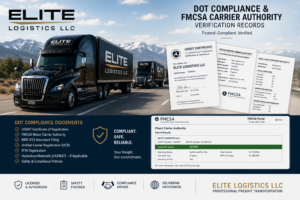
Behind every on-time delivery is a professional dispatch team actively managing routes, driver communication, and shipment exceptions. Elite Logistics LLC’s operations infrastructure ensures your freight never goes dark.
Verify DOT and MC Authority Before Anything Else
The single most important pre-qualification step when choosing a freight trucking company is confirming that the carrier holds valid operating authority issued by the Federal Motor Carrier Safety Administration (FMCSA). Any carrier transporting freight for hire across state lines is required by law to maintain both a USDOT number and a Motor Carrier (MC) number.
How to Check Carrier Authority in 60 Seconds
Visit the FMCSA’s SAFER (Safety and Fitness Electronic Records) system at safer.fmcsa.dot.gov and search by company name or USDOT number. Within seconds you will see the carrier’s authority status, insurance on file, safety rating, and crash history. Do not move forward with any carrier whose authority is listed as “Revoked” or “Inactive.”
- Active USDOT number confirmed via FMCSA SAFER system
- Motor Carrier (MC) operating authority listed as “Active”
- Minimum $750,000 cargo liability insurance on file (higher for hazmat)
- No unsatisfactory safety rating or imminent hazard orders
- Carrier is registered under the correct commodity classification
- Insurance certificate (COI) provided and current
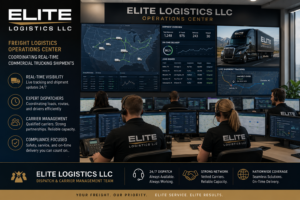
Confirming a carrier’s active DOT number, MC operating authority, and current cargo insurance via the FMCSA SAFER system is the non-negotiable first step before any freight relationship begins.
Match Your Freight to the Right Service Type
Not every shipment should move the same way. One of the most common — and costly — mistakes shippers make is defaulting to a single freight mode regardless of load size, transit urgency, or commodity type. Understanding the differences between primary freight service types lets you optimize both cost and transit time on every lane.
| Service Type | Best For | Typical Load Size | Transit Speed |
|---|---|---|---|
| LTL (Less-Than-Truckload) | Small-to-mid size shipments sharing trailer space | 1–6 pallets / under 15,000 lbs | Moderate (2–5 days) |
| FTL (Full Truckload) | Large shipments, time-sensitive cargo, high-value goods | 10+ pallets / 20,000–44,000 lbs | Fast (1–3 days direct) |
| Partial Truckload (PTL) | Mid-size loads too large for LTL, not enough for FTL | 6–12 pallets | Moderate to Fast |
| Expedited Freight | Emergency or time-critical deliveries | Any size | Urgent (same/next day) |
| Dedicated Contract Carriage | High-volume, consistent lanes with set schedules | Varies | Customized |
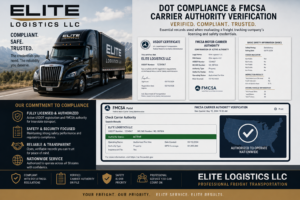
Real-time GPS tracking is now a baseline expectation, not a premium add-on. Elite Logistics LLC provides customers with live shipment visibility, automated exception alerts, and electronic proof of delivery on every load.
Evaluate Safety Performance — Not Just Price
Price transparency is important, but it should never be the only lens through which you evaluate a freight carrier. A carrier with a history of cargo claims, accidents, or FMCSA violations is a liability — and one that will cost you far more than a rate premium ever would.
FMCSA Safety Measurement System (SMS) Scores
The FMCSA’s Safety Measurement System scores carriers across seven Behavioral Analysis and Safety Improvement Categories (BASICs): Unsafe Driving, Hours-of-Service Compliance, Driver Fitness, Controlled Substances/Alcohol, Vehicle Maintenance, Hazardous Materials Compliance, and Crash Indicator. Carriers with alerts in multiple BASICs categories represent elevated risk and warrant deeper scrutiny before engagement.
🚨 Red Flags to Watch For When Choosing a Carrier
Unsatisfactory FMCSA safety rating · High out-of-service violation rates · No verifiable insurance certificate · Frequent cargo claim history · No formal claims resolution process · Unwillingness to provide references from current customers
When evaluating carriers, ask directly for their cargo claim ratio — the percentage of shipments that resulted in a filed claim. Industry-leading carriers maintain ratios below 0.5%. Anything above 2% deserves serious scrutiny. Also request the carrier’s on-time delivery percentage for lanes similar to your own. Top-tier freight trucking companies track and publish these metrics because they have nothing to hide.
How to Compare Freight Rates Without Sacrificing Service Quality
Freight rates vary based on origin and destination ZIP codes, freight class, weight, dimensions, declared value, and market conditions including fuel surcharges and capacity constraints. Getting multiple quotes is smart — but comparing them accurately requires understanding what each quote includes and excludes.
Key Cost Components in a Freight Quote
- Base line-haul rate (determined by mileage and freight class)
- Fuel surcharge (indexed weekly to the U.S. DOE diesel price)
- Accessorial charges (liftgate, residential delivery, inside delivery, limited access)
- Declared cargo value / cargo liability coverage
- Minimum charge (floor rate applied to very small shipments)
- Detention and layover fees (if applicable)
A carrier quoting an unusually low base rate may compensate through accessorial charges that appear after delivery. Always request a fully inclusive, all-in rate for your specific shipment parameters and compare those final figures — not line-item rates in isolation.
💡 Elite Logistics LLC Pro Tip: The Total Cost of Ownership Calculation
Factor in the cost of damages, claims processing time, customer service calls, and chargebacks when evaluating any carrier’s long-term cost to your business. A carrier charging $150 more per load with a 0.3% claim rate will almost always cost less than the cheapest option with a 3% claim rate.
Shipment Tracking Technology and Real-Time Visibility
Modern freight customers expect more than a pickup confirmation and a delivery receipt. Real-time shipment visibility has moved from a competitive differentiator to a baseline expectation — and for good reason. When you know exactly where your freight is, you can proactively communicate with your customers, manage inventory levels, and respond to exceptions before they become crises.
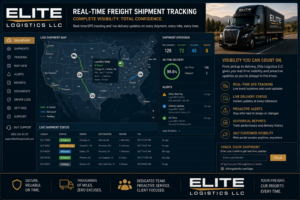
Modern freight carriers offer GPS-based real-time tracking that keeps shippers informed at every mile of the journey.
Technology Features That Indicate a Modern, Reliable Carrier
- GPS-enabled real-time tracking with customer-facing portal or app
- Electronic Logging Devices (ELDs) for HOS compliance monitoring
- Automated delivery notifications and exception alerts via text/email
- Electronic Bill of Lading (eBOL) and Proof of Delivery (ePOD)
- API or EDI integration capability with your TMS or ERP system
- Digital claims submission and status tracking
Industry Experience, Equipment, and Specialization
General freight competence is a starting point, not a finish line. The right freight trucking company for your business will have direct experience moving your commodity type — whether that means temperature-controlled produce, oversized industrial equipment, hazardous materials, or high-value electronics. Specialized cargo requires specialized equipment, procedures, and trained drivers.
Questions to Ask About Carrier Experience
- How many years have you been operating in my primary shipping lanes?
- Do you own your equipment, or do you rely on owner-operators and brokered capacity?
- What is your driver retention rate? (High turnover = higher risk)
- Do your drivers carry hazmat endorsements if relevant to my cargo?
- Can you provide three customer references in my industry segment?
- How do you handle freight exceptions, damages, and claims resolution?
At Elite Logistics LLC, our team brings years of dedicated freight experience across a wide range of industries. We specialize in building long-term carrier relationships — not transactional one-off quotes — because we understand that consistency and communication are what make a freight partner truly valuable over time.
🏆 Why Businesses Choose Elite Logistics LLC as Their Freight Partner
From DOT-compliant equipment and vetted drivers to real-time tracking and transparent all-in freight rates, Elite Logistics LLC is built around the standards that modern shippers demand. Our commitment: no surprises, no excuses, and freight that moves the way your business needs it to.
Frequently Asked Questions